Common problems when booking Hackney rubbish collection
Posted on 08/07/2026
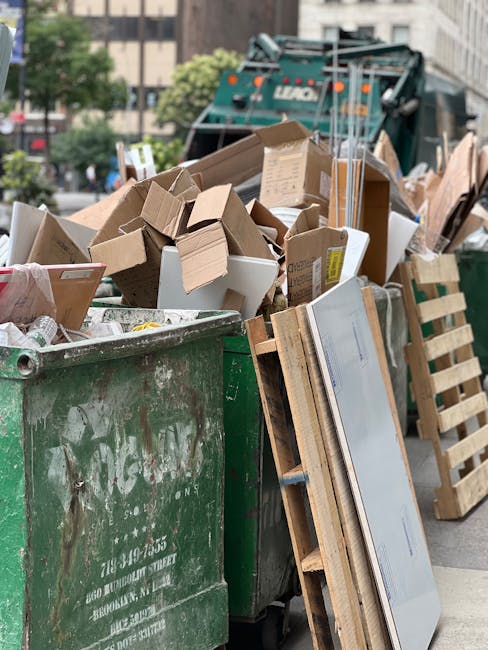
Booking rubbish removal sounds simple enough. You make a call, choose a time, and the mess disappears. In real life, though, common problems when booking Hackney rubbish collection can creep in fast: vague quotes, missed access details, parking headaches, unsuitable waste types, and confusing collection windows. If you live, work, or manage a property in Hackney, these little snags can turn a quick tidy-up into a frustrating delay.
This guide breaks down the issues people run into most often, why they happen, and how to avoid them without overcomplicating things. Whether you are clearing a flat after a move, handling a last-minute office clear-out, or just trying to get rid of a bulky sofa that has been taking up half the hallway for too long, the aim here is practical clarity. No fluff. Just the stuff that helps you book with a bit more confidence.
- Why these booking problems matter
- How rubbish collection bookings usually work
- Benefits of booking properly the first time
- Who this guide is for
- Step-by-step booking guidance
- Expert tips to avoid the usual traps
- Common mistakes to avoid
- Tools, resources and recommendations
- Law, compliance and best practice
- Options and comparison table
- Real-world example
- Practical checklist
- Conclusion
- Frequently asked questions
Why Common problems when booking Hackney rubbish collection Matters
Most booking issues are not dramatic on their own. But they stack up. A quote that is only partly accurate can become an awkward conversation on arrival. A narrow stairwell or busy street can slow the job down. A missed detail about builder's waste, white goods, or bulky furniture can mean the wrong vehicle turns up. That is when a job becomes longer, pricier, or rescheduled.
Hackney adds its own little complications. Some streets are tight. Parking can be awkward. Flats are often upper-floor or basement conversions with shared entrances, and that changes how waste gets moved. If you have ever watched a van try to reverse into a narrow road while everyone else is trying to get past on foot, you will know the feeling. It is one of those London realities that nobody puts in the brochure.
The key point is simple: most problems are avoidable with good information upfront. A provider can only plan properly if they know the waste type, access conditions, load size, and timing. When those details are missing, misunderstandings follow.
For people comparing broader waste services or trying to understand what is included, the wider context on service options and coverage can help make the booking process less guessy. And if cost is your main concern, it is worth reading the company's pricing and quotes guidance before you commit.
How Common problems when booking Hackney rubbish collection Works
At its simplest, rubbish collection booking is a short information exchange. You describe what needs removing, the provider estimates how much space it will take, agrees a time slot, and sends the right crew and vehicle. Easy on paper. In practice, small details decide whether it goes smoothly.
Here is the usual sequence:
- You explain what you need collected, including the type and rough amount of waste.
- The provider checks whether it is general household rubbish, garden waste, furniture, office items, builders waste, or something more specialised.
- They estimate load size, access needs, and any extra time required.
- A quote is given, sometimes with terms about lifting, parking, or specialist disposal.
- A collection slot is arranged.
- The team arrives, confirms the load on site, and removes the waste.
The problems usually happen between steps 1 and 4. Maybe the customer says "a few things" and means one small pile, while the crew is expecting a van nearly full. Maybe the customer forgets to mention that the items are on the third floor with no lift. Maybe the booking is made without considering whether the waste is mixed, heavy, or awkwardly stacked.
To be fair, most people do not think like removals planners. They are not supposed to. But a bit of forethought helps a lot, especially if you are arranging a service such as furniture disposal in Hackney, garden waste removal, or a more involved house clearance.
Key Benefits and Practical Advantages
Booking properly does more than save time. It also reduces stress, which sounds obvious until you are standing in a cluttered flat trying to coordinate keys, parking, and bin bags before lunch. A good booking process makes the whole job feel manageable.
- More accurate pricing: The cleaner the information, the less likely you are to face unexpected additions.
- Faster collection: The right team and vehicle arrive prepared for the job.
- Less disruption: Good planning helps avoid blocking shared hallways, staircases, or loading areas for too long.
- Better safety: Heavy or awkward items can be handled with proper equipment and enough crew.
- Lower stress: You are not spending the day chasing updates or re-explaining the same details.
There is also a sustainability angle worth mentioning. When waste is sorted and described correctly, it is easier to handle it in line with responsible disposal practices. If that matters to you-and it should-it is worth looking at the company's approach to recycling and sustainability before you book.
Expert summary: The best rubbish collection bookings are not the cheapest quote on a screenshot. They are the ones that are clear, specific, and realistic from the start. That is where the real saving usually is.
Who This Is For and When It Makes Sense
This guide is for anyone in Hackney who needs waste removed and wants fewer surprises. That includes tenants, homeowners, landlords, letting agents, shop owners, office managers, builders, and market traders. In other words, quite a lot of people.
It makes particular sense if:
- you are clearing a flat or house after a move
- you have bulky items that will not fit in normal bins
- you are handling builders waste after light renovation work
- you need an office clearance and want minimal disruption
- you have garden cuttings after a major tidy-up
- you need same-day or near-immediate collection
People often underestimate how different these jobs are. A single mattress is not the same as a mixed pile of boxes, broken shelving, and plasterboard offcuts. A home clearance is not the same as a small office clear-out. And a collection near a busy market street is its own little challenge entirely.
If you are trying to decide what type of collection you need, browsing the different services at Waste Collection Hackney can help you match the job to the right service rather than forcing everything into one vague category.
Step-by-Step Guidance
Let's keep this practical. If you want to avoid the most common booking problems, use this order.
1. List everything that needs removing
Write down the main items first, then the smaller bits around them. Include furniture, bags, boxes, garden waste, broken fixtures, and any building debris. A quick walk through the space with your phone camera often helps more than memory. It is amazing what you forget once you start rushing.
2. Separate waste types where possible
Mixed waste is not always a problem, but it can change how the job is priced and handled. Furniture, garden waste, office contents, and builders waste may all be treated differently. If you know you have one specific type, mention that clearly. If you are unsure, say that too. Honesty saves time.
3. Check access and parking
This is one of the biggest sticking points in Hackney. Is the waste on the ground floor or the fourth floor? Is there a lift? Is the street narrow? Can a van stop close enough? Are there timed restrictions, a permit issue, or a shared entrance? Little access details can make a very big difference.
4. Ask what is included in the quote
Does the price cover labour, loading, disposal, and VAT if applicable? Are heavy items extra? Is there a surcharge for waiting time? Will the crew move items from inside the property or only collect from kerbside? These are sensible questions, not annoying ones.
5. Confirm the time window
Some bookings are exact. Others are windows. If your schedule is tight, say so. If you need the collection before a tenant handover, photo shoot, or builder arrival, make that clear. A vague "sometime in the afternoon" is fine if you have flexibility. Not so great if you have a train to catch.
6. Double-check restricted or specialist items
Certain items need extra care or may require separate handling. This can include fridges, mattresses, electrical items, or construction materials. The point is not to memorise every category. The point is to ask before the van arrives.
7. Get the collection day ready
Move items to where they can be accessed safely if you are able to do that. Keep pathways clear. Make sure pets are out of the way. Have keys, codes, or entry instructions ready. A little prep goes a long way when everyone's trying to work quickly.
Expert Tips for Better Results
A few small habits make bookings much easier. They are simple enough, but that is usually the point.
- Take photos from different angles. One shot rarely tells the whole story.
- Measure large items. A sofa that looks "normal" can be awkwardly oversized.
- Be specific about stairs and lifts. "There are some steps" is not the same as three full flights.
- Keep the waste together if possible. Scattered items take longer to assess and load.
- Book earlier for busy periods. Fridays, move-out dates, and month-end can get hectic.
- Read terms before paying a deposit. It sounds dull. It is dull. Still worth it.
One very ordinary but useful tip: if you are booking for a flat share or rental property, ask one person to be the main contact. Too many messages from too many people can create confusion very quickly. We have all seen that group chat spiral. Not ideal.
For residents wanting practical local context, guides such as the London Fields rubbish collection guide and bulky rubbish clearance near Hackney Wick Station are useful examples of how collection needs can change by location and property layout.

Common Mistakes to Avoid
This is where most booking problems start. Sometimes it is a minor oversight. Sometimes it is a full-blown misunderstanding. Usually, it is one of the following.
Giving a vague description
"A bit of rubbish" is not enough. Neither is "just some old stuff." Try to name the items, estimate volume, and say whether it is inside, outside, upstairs, or already near the kerb.
Forgetting about access
People often think the job is only about the waste itself. In reality, the route to the waste matters just as much. A blocked driveway, no lift, or tight staircase can change the whole operation.
Assuming everything is included
Some quotes look straightforward but do not spell out what happens if the load is heavier than expected or the collection takes longer. That does not mean the provider is hiding anything. Sometimes the issue is simply that the customer never asked the right questions.
Mixing incompatible waste
Garden cuttings, broken furniture, and renovation debris may be perfectly manageable when clearly identified. Mixed into one pile with no explanation, they can complicate the estimate.
Leaving booking until the last minute
This one bites people the most. If you are moving out, handing keys back, or dealing with an end-of-tenancy clean, a late booking can leave you with very few options. Same-day help is sometimes available, but not always.
For a better sense of booking pressure around urgent slots, it can help to read same-day rubbish collection availability in E8 before relying on a last-minute request.
Tools, Resources and Recommendations
You do not need fancy software or a project plan to book rubbish collection well. But a few basic tools make life easier.
- Phone camera: Take clear photos of the waste and the access route.
- Measuring tape: Useful for large furniture, appliances, or stacked waste.
- Notes app: Keep item lists, gate codes, and floor details together.
- Calendar reminder: Helps with collection windows, especially if you need to be present.
- Storage bags or labels: Handy if you are separating items before collection.
For business users, it can also help to review service-specific pages if the load is specialised. For example, office clear-outs are rarely identical to domestic jobs, and builders waste can be a different beast again. The pages on office clearance Hackney and builders waste disposal Hackney are useful if your job falls into one of those categories.
If you want to understand the company's wider service background and working approach, the about us page and insurance and safety information are worth a quick look too. People skip these pages all the time, then later wish they had not. Funny how that works.
Law, Compliance, Standards, or Best Practice
When you book rubbish collection, you are not just arranging a van. You are also handing over materials that need to be dealt with responsibly. In the UK, that means working with a provider that follows proper waste handling, transport, and disposal practice. You do not need to become a legal expert, but you should expect the basics to be handled properly.
Best practice usually includes:
- clear description of waste types
- responsible separation where practical
- safe manual handling
- appropriate loading and transport
- transparent pricing and terms
- care with items that need special treatment
If a company is upfront about its terms and conditions, payment process, and data handling, that is a good sign. The same goes for payment and security and privacy policy information. It shows they are thinking beyond the quick job and into the trust side of the relationship.
In day-to-day terms, the safest approach is to ask direct questions: what happens to the waste, how are costs calculated, what items are excluded, and what should you prepare in advance? Clear answers are better than polished sales talk. Always.
Options, Methods, or Comparison Table
Different booking methods suit different situations. Here is a simple comparison to help you choose what fits your job best.
| Booking method | Best for | Pros | Potential drawback |
|---|---|---|---|
| Same-day collection | Urgent clear-outs, last-minute move-outs, unexpected waste | Fast, flexible, solves a problem quickly | Availability can be limited and timing may be tighter |
| Scheduled collection | Planned house clearances, office work, renovation prep | Better planning, easier to prepare access and waste | Less suitable if your timing changes at short notice |
| Kerbside-ready collection | Waste already moved outside | Can be simpler and quicker | Not suitable for heavy or hard-to-move items inside the property |
| Full-service removal | Bulky furniture, mixed waste, upper-floor properties | Less physical effort for the customer, more convenient | May cost more because labour and handling are included |
If you want a deeper look at how different service types fit real situations, the broader services overview can help you decide whether your job is more like a quick pickup or a full clearance.
Case Study or Real-World Example
Imagine a tenant in Hackney moving out on a Friday afternoon. The property is a first-floor flat above a busy street. There is a sofa, two broken shelves, a mattress, and five bags of mixed rubbish in the kitchen. The tenant books collection quickly but says only "a few bulky items."
On the day, the team arrives and finds no parking space near the entrance, a narrow staircase, and more waste than expected. The collection still happens, but it takes longer than planned and the customer is stressed because the move-out deadline is close. Nobody is happy. No one is furious either, just that mildly exhausted London feeling where everybody is trying to keep it civil.
Now compare that with a better booking. The tenant sends photos, mentions the first-floor access, confirms the mattress size, lists the shelves, and asks whether the team can remove items from inside the flat. The provider plans the job properly, brings the right crew, and sets the right time slot. Much smoother. Fewer surprises. Less awkward standing around in the hallway while the kettle boils in the background.
That is the real lesson here: the waste is often not the problem. The missing context is.
Practical Checklist
Use this before you confirm the booking.
- Have I listed every item that needs collecting?
- Have I described the waste type clearly?
- Have I included photos if the job is bulky or mixed?
- Have I checked the number of floors, stairs, and lift access?
- Have I thought about parking or street access?
- Do I know whether the quote includes labour and disposal?
- Have I asked about anything that might count as specialist waste?
- Is the time slot realistic for my schedule?
- Do I know who will be the main contact on the day?
- Have I reviewed the terms before paying?
If you can tick most of those off, you are in much better shape than the average last-minute booking. Not perfect, maybe. But definitely better.
Conclusion
The most common problems when booking Hackney rubbish collection are usually not dramatic, and that is exactly why they get missed. A vague description here, a forgotten staircase there, and suddenly the simple job is more complicated than it needed to be. The good news is that most of these issues are easy to prevent with clear information and a bit of preparation.
Think of the booking as a small handover. The more accurately you describe the waste, the easier it is for the collection team to do the job properly. That means better timing, fewer misunderstandings, and less stress on the day. Pretty straightforward really.
And if you are comparing service options, looking at the details before booking is always worth it. A few extra minutes now can save you a lot of hassle later.
Get a free quote today and see how much you can save.
With the right prep, even a messy clear-out can feel oddly satisfying once it is done. Fresh space, no clutter, and a bit more breathing room again. Hard to beat that, to be honest.
 Tipper Van - Rubbish Disposal and Waste Collection Prices in Hackney, E5
 Luton Van - Rubbish Disposal and Waste Collection Prices in Hackney, E5


